
The Sisters and the Throne
The Man Who LaughsQueen Anne’s relation to Josiana mixes kinship, jealousy, and political command, turning family into an instrument of state.
increasing Bearing strength in each event
 decreasing
Bearing strength in each eventdecreasingSisters of Unequal Birth
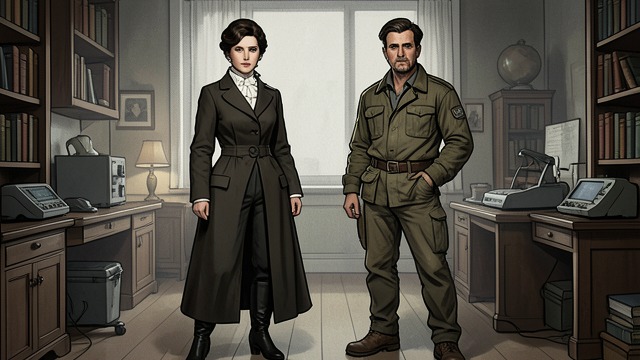
Sisters of Unequal Birth
A family shaped by scandal
Anne and Josiana are connected through James II’s family and court.
Their different birth circumstances become a source of comparison.
Kinship gives them proximity without ensuring affection.
Beauty and resentment
Anne resents Josiana’s beauty and royal irregularity.
Josiana’s position reminds Anne of her own contested status.
The sisters’ relationship remains shaped by rank and insecurity.
A Watched Courtship
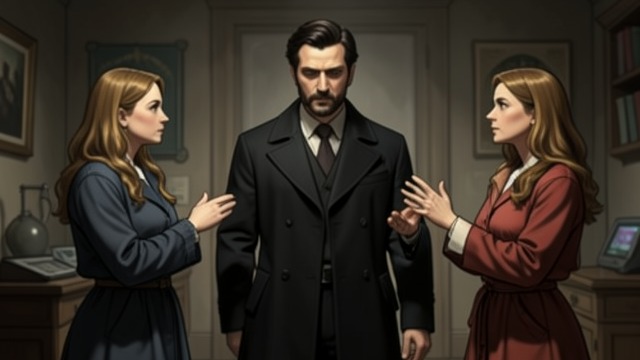
A Watched Courtship
Three-way surveillance
Josiana watches Lord David and David watches Josiana.
Queen Anne also monitors them through Barkilphedro.
The court makes private affection a matter of political observation.
Barkilphedro between them
The courtier reports and flatters while appearing insignificant.
His presence turns family confidence into an instrument of control.
The sisters’ bond is filtered through secrets and suspicion.
A Royal Command
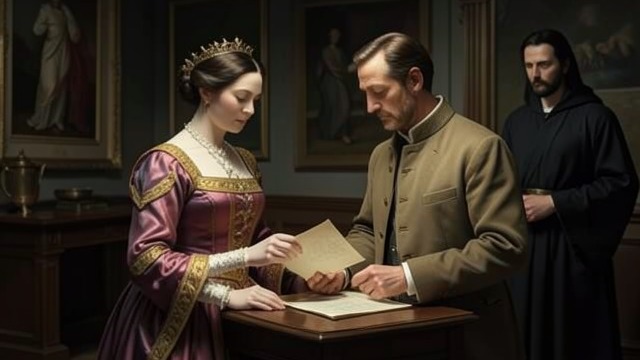
A Royal Command
Marriage ordered
Anne commands Josiana to marry the newly recognized heir.
The queen frames the order as both royal pleasure and family concern.
A sister’s authority becomes indistinguishable from sovereign power.
The private cost
Josiana’s desire is treated as subordinate to inheritance and policy.
The marriage would rearrange her relationship with both men.
Royal protection arrives as another form of coercion.
The Duchess Refuses
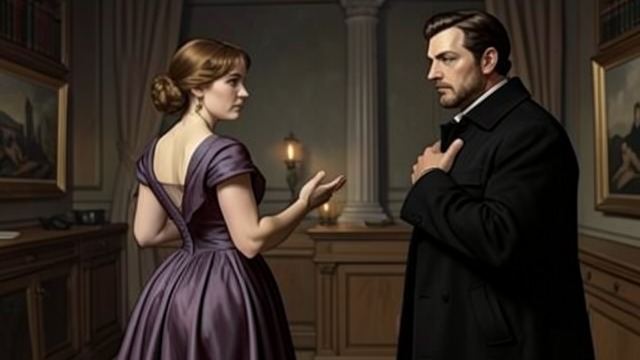
The Duchess Refuses
The command arrives
Josiana reads Anne’s letter and the report about Gwynplaine.
She realizes that he is both her husband by order and her new social superior.
The documents destroy the arrangement she had expected.
A cold dismissal
Josiana orders Gwynplaine to leave her private room.
She names him her husband but rejects him as a lover.
Her response exposes the difference between royal command and personal desire.
Affection as Statecraft
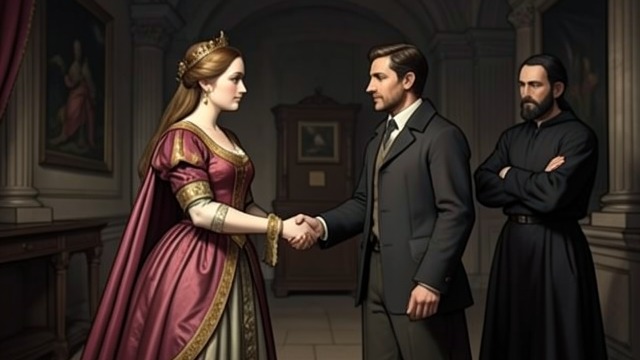
Affection as Statecraft
A staged reconciliation
Anne presents the marriage as protection for Josiana’s inheritance.
Her concern coexists with resentment and amusement at the expected spectacle.
Personal feeling serves political arrangements rather than resolving them.
Family left divided
Josiana remains attached to Lord David while Gwynplaine becomes her designated spouse.
The queen’s plan heightens rivalry inside the family.
The novel leaves their domestic future unsettled.
Before Josiana’s adult life at court
During Josiana and David’s years of engagement
After Gwynplaine’s identity is confirmed in 1705
At Corleone Lodge, the morning after Gwynplaine’s arrival
During the court preparations for Gwynplaine’s admission
